
Hearing aids are vital in improving the quality of life for individuals with hearing loss. However, their effectiveness hinges on how well they are tailored to the user’s auditory profile and ear anatomy. This is where Real Ear Measurements (REM) prove invaluable. REM is a gold-standard method for verifying and optimising hearing aid performance, ensuring users experience improved comfort, clarity, and overall satisfaction. This article delves into the methodology, benefits, and significance of REM and its superiority over standard fitting practices.
What is Real Ear Measurement (REM)?
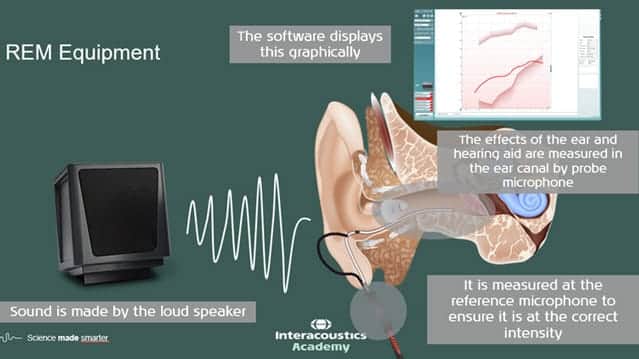
Real Ear Measurement is an objective procedure used to verify how a hearing aid amplifies sound within an individual’s ear canal. By using a probe microphone placed close to the eardrum, REM measures the sound pressure level (SPL) produced by the hearing aid, allowing audiologists to fine-tune the device to match the user’s specific hearing needs.
The ear canal’s shape, size, and acoustics vary significantly from person to person and even from ear to ear on the same person! These unique features can dramatically impact how sound is perceived. Without accounting for these differences, even the most advanced hearing aids may fail to deliver optimal results. REM addresses this variability by tailoring the hearing aid to the individual’s ear canal acoustics, ensuring precision in amplification.
Insertion Gain vs. Live Speech Mapping
REM employs two key methods to optimise hearing aid performance:
- Insertion Gain: This traditional method compares sound pressure levels in the unaided and aided ear to ensure that amplification meets prescriptive targets. It is highly effective for assessing how well the hearing aid boosts sound across different frequencies.
- Live Speech Mapping: This output-based method uses real speech signals to ensure intelligibility within the user’s residual auditory area. It allows the audiologist to balance clarity and comfort, fine-tuning the device for real-world scenarios.
While insertion gain focuses on frequency-specific amplification, speech mapping provides a broader view of the hearing aid’s performance in everyday listening environments.
How is REM Performed?
The traditional REM process involves several steps:
- Probe Tube Placement: A thin silicone probe tube is carefully inserted into the ear canal, ensuring it does not touch the tympanic membrane. The audiologist uses an otoscope to ensure proper placement and rule out obstructions such as earwax.
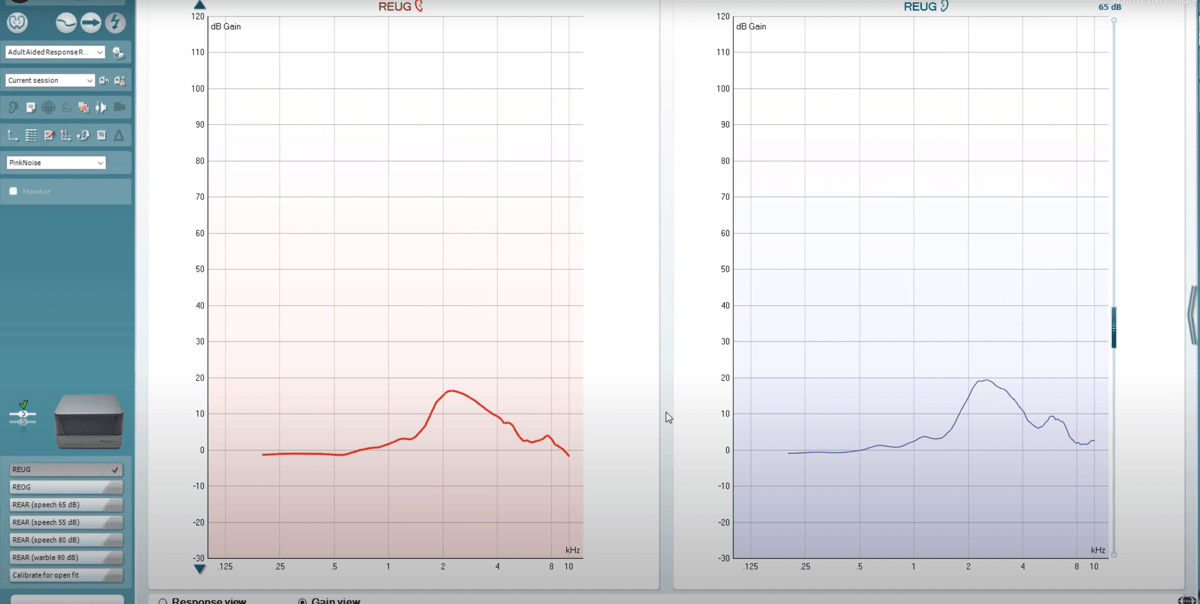
- Baseline Measurement (REUR): A test sound is played through a loudspeaker positioned near the patient. This sound is measured in the open ear without the hearing aid in place, capturing the Real Ear Unaided Response (REUR).
- Aided Measurement (REAR): The hearing aid is then placed in the ear and activated. The same test sound is played, and the Real Ear Aided Response (REAR) is recorded. The difference between REUR and REAR is known as the Insertion Gain.
The Live Speech Mapping (LSM) process involves:
- Speech Mapping: A speech or speech-like signal is used to map how well the hearing aid amplifies speech within the residual auditory area, ensuring intelligibility without discomfort.
Adjustments and Fine-Tuning: The measured results are compared against the prescribed target based on the user’s audiogram. If discrepancies are detected, the hearing aid’s settings, such as gain or frequency response, are adjusted until the output matches the prescribed levels.
Benefits of REM/LSM
1. Personalised Fit
REM ensures that the hearing aid is optimised to the individual’s ear canal, accounting for anatomical differences that can alter sound delivery. This personalised approach results in improved comfort and better sound quality.
2. Improved Speech Clarity
By precisely matching the hearing aid’s output to the user’s hearing loss profile, REM significantly enhances the clarity of speech at various volume levels. Studies have shown that individuals fitted with REM enjoy better word recognition, particularly in quiet and moderate environments.
3. Better Long-Term Satisfaction
Hearing aids fitted using REM lead to higher user satisfaction rates. Research indicates that users are more likely to stick with their devices and report positive outcomes compared to those who receive standard, first-fit fittings.
4. Uncovers Hidden Issues
Unlike manufacturer-preset fittings, REM identifies subtle issues that could hinder the hearing aid’s performance, such as mismatched frequency amplification or inadequate gain. This ensures the hearing aid delivers its full potential.
5. Objective Verification
REM provides objective data that validates the hearing aid’s performance. This eliminates guesswork and reliance on subjective feedback during the initial fitting process, resulting in a more accurate and efficient fitting.
REM vs. Standard Fitting Methods
The most common alternative to REM is the manufacturer’s first fit, which uses generic settings based on average ear canal dimensions. However, this approach falls short in several ways:
- Deviation from Target: Manufacturer presets often fail to match the prescribed target, especially in higher frequencies. REM, on the other hand, ensures precise alignment with the user’s hearing needs.
- Speech Discrimination: Users fitted with REM show significantly better speech understanding in quiet and moderate noise environments compared to those fitted using first-fit methods.
- Consistency: While first fits may work for some, they lack the consistency and reliability that REM provides. REM eliminates variability by tailoring the hearing aid to the individual’s ear.
Why Choose REM for Hearing Aid Fittings?
At The Audiology Place, we are committed to using evidence-based best practices, including REM, to provide our clients with the highest standard of care. By incorporating REM into our hearing aid fittings, we ensure:
- Optimal Sound Quality: REM guarantees that the hearing aid delivers clear, natural sound tailored to your unique needs.
- Enhanced Comfort: Precise adjustments mean less likelihood of discomfort or feedback.
- Peace of Mind: With objective verification, you can trust that your hearing aid is performing as it should.
Real Ear Measurement is not just a tool; it’s a cornerstone of modern audiology. By choosing a clinic that prioritises REM, you take a vital step toward achieving better hearing outcomes and an improved quality of life. At The Audiology Place, we believe in the power of REM to transform lives and ensure that every hearing aid delivers its full potential.